Paper bags can be a better choice for dry retail products and gifts because they combine a renewable fiber base, a useful recycling route where accepted, and a surface and structure that support thoughtful presentation. Simple, unlaminated paper bags also reduce the persistent plastic waste associated with conventional plastic carriers.
Those benefits make paper a strong option for many brands. Its climate impact needs a separate comparison: a lightweight plastic bag can perform better on some life-cycle measures. The choice becomes clearer when you consider the finished bag—its materials, the purchase it carries, how often it is used and where it goes afterward.
Renewable fiber, with sourcing you can verify
Paper’s main structural material is cellulose fiber, usually obtained from wood, recovered paper or a mixture of both. Wood is a renewable resource, while responsible forest management helps maintain the forests supplying it. Recycled fiber keeps material already in circulation useful. Conventional polyethylene is usually made from fossil feedstocks, so switching a carrier to paper offers a way to reduce reliance on fossil-based plastic. The sourcing decision determines how responsibly that fiber is obtained.
FSC’s label guidance helps distinguish sourcing claims. For example, FSC 100% identifies forest-based material from FSC-certified forests, while FSC Recycled identifies 100% recycled forest-based material. These address different sourcing priorities. If your brand wants a particular recycled content, put that percentage in the material specification and obtain supporting documentation. Brown paper can contain virgin or recycled fiber; its appearance does not establish its history.
Paper has an advantage on persistent litter
Uncoated paper fibers are biodegradable, although the speed and extent of decomposition depend on moisture, temperature, oxygen availability and microorganisms. Conventional polyethylene can persist and fragment into smaller pieces of plastic. That difference matters when a bag escapes collection. A plastic film laminated to paper remains plastic, so a laminated gift bag has a different litter profile from a simple paper carrier.
The 2021 UNEP/UNWTO life-cycle guide for tourism businesses identifies lower littering impacts for paper bags than their single-use plastic equivalents. Biodegradability alone, however, does not establish that a finished bag is suitable for home or industrial composting. That depends on the complete construction and the composting conditions. Reusing a clean bag and then sending it through an accepted paper-recycling route gives its fibers further useful work.
A simpler construction helps paper reach recycling
Where local programs accept them, clean, unlaminated paper bags can enter paper-and-cardboard recycling. Water and mechanical action separate the fibers so they can be recovered for new products. A carrier used for dry, boxed cosmetics or jewelry is well placed to remain clean enough for this route. Polyethylene bags can also be recycled, but collection may depend on a separate film scheme. In both cases, the local program determines which bags it accepts.
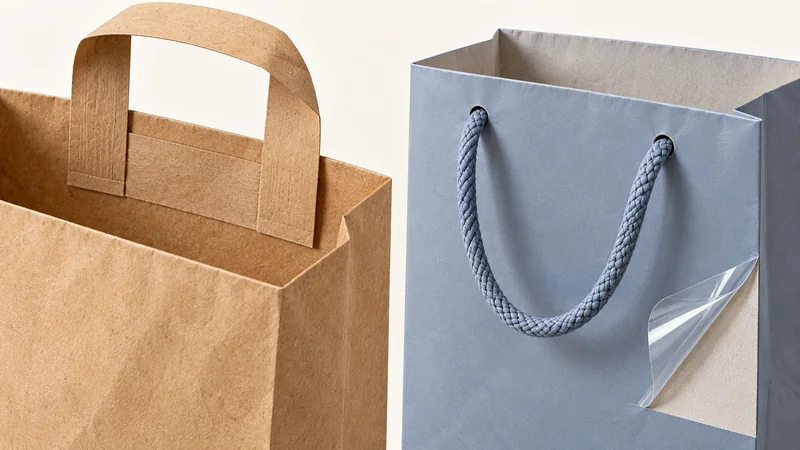
The complications lie in the finished bag. Plastic lamination adds a layer that must be dealt with during recovery. Wet-strength treatments, which help paper remain intact when wet, can make it harder to break down in a standard pulping process. Adhesives and coatings also need to be compatible with the intended process, while nonpaper handles or fittings may need removal. Starting with uncoated paper and paper handles reduces the number of material combinations to assess.
Technical recyclability and local acceptance answer different questions: can the bag be processed, and can the customer actually send it to that process? This distinction matters for bags manufactured in China for overseas brands. Disposal instructions should match the place where customers use and discard the bags, rather than the collection system near the factory.
Paper can make the bag part of the gift
A paper carrier also contributes something customers experience immediately. Folded sides and a defined base create a shape around a box, while broad panels give graphics room to read. A smooth sheet can carry crisp, detailed printing; a textured, uncoated paper can lend the bag a softer, tactile character. Compared with a thin polyethylene carrier that drapes around its contents, a paper bag can feel more like an extension of the product’s presentation.
Consider a boxed skincare gift set. The retail box already provides product protection and presentation, so the carrier’s main jobs are comfortable carrying and completing the gift. A closely sized paper bag, a well-placed logo and suitable handles can achieve that with few components. Fit contributes to the experience: too much space lets the box move around, while an overly tight opening makes removal awkward.
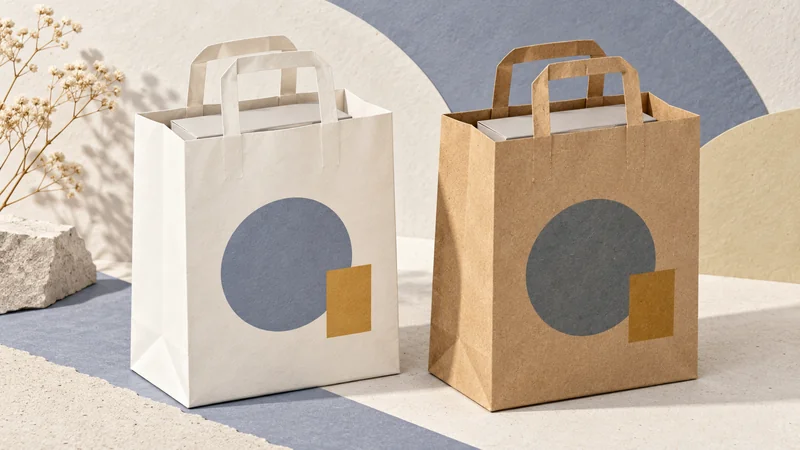
Brown kraft paper is one option for a warm, natural-looking surface. Its color affects the printed result, so artwork approved on white paper may look different on kraft. At CMIC, we can develop paper and print options together, helping a brand compare the appearance before adding finishes. Texture, color and proportion may provide the desired character with a simple, unlaminated construction.
Climate impact depends on the whole bag
Conventional polyethylene—the plastic used in many carrier bags—can make a very lightweight checkout bag or a thicker bag intended for repeated use. Paper carriers can require more material by weight to do the same carrying job, and papermaking involves pulping, drying and other resource-consuming stages. Production energy, recycled content in either material, bag weight and disposal all affect the comparison. For overseas supply, packed volume, weight and freight method also matter.
The 2021 UNEP/UNWTO guide reports that single-use paper bags often perform worse than single-use plastic bags for climate change and several other assessed environmental impacts. It also notes that issues such as littering and microplastics are not quantitatively covered by the studies it discusses. This explains how paper can have a meaningful litter advantage without being the lower-carbon option in a particular comparison.
Reuse can change the balance by spreading production impacts across more carrying trips, especially when an existing bag replaces one that would otherwise be issued. Strong handle attachments, comfortable grips and a convenient size help make those later trips plausible. Simply adding material to make a bag more substantial brings little reuse benefit if customers carry it only once.
For a branded gift bag, compare the actual alternatives at the same carrying capacity and a realistic number of uses. A heavier carrier with board reinforcement, lamination and decorative handles differs substantially from a lightweight grocery bag. General bag studies explain which variables matter; a precise carbon-saving claim needs evidence for the specified bags and their supply and disposal conditions.
Fit the material to the purchase and the journey
| Carrying situation | Useful direction | Why it matters |
|---|---|---|
| Dry, boxed cosmetics, jewelry or gifts | Start with a well-fitted, unlaminated paper bag. | Presentation and fiber recovery can align without adding a moisture barrier. |
| Several dense boxes or boxed glass containers | Compare a reinforced paper construction with a durable reusable carrier, using loaded samples. | Handle attachments, base strength and movement of the contents matter more than paper thickness alone. |
| Condensation, wet containers or repeated rain exposure | Consider a water-resistant reusable carrier, including suitable polyethylene options. | Moisture weakens untreated paper. Adding barriers changes the construction and its recycling requirements. |
When we develop a bag at CMIC, product dimensions and packed weight provide a useful starting point. We can develop paper, handle and finish options, then assess samples with the intended contents: lifting and carrying them, checking the base and handle attachments, and observing how the surface marks or creases. If wet exposure is part of normal use, it belongs in that evaluation. These observations help establish whether a lighter sheet is sufficient, a particular area needs reinforcement, or another construction makes more sense.
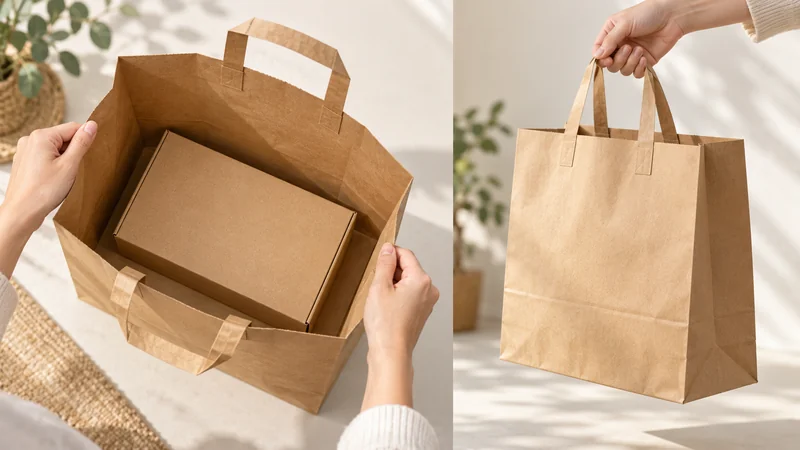
For a boxed gift carried home in dry conditions, those choices can preserve what makes paper appealing: a considered shape, a pleasant surface and a straightforward fiber construction. If you are weighing a switch to paper, tell us about your product and how the bag will be used. We can turn those priorities into suitable material and construction options for sampling.