Sustainable packaging can attract environmentally conscious customers when the improvement is tangible: a parcel with less empty space, an insert that protects without leaving a pile of parts, or a refill that is easy to buy again. These details give a brand’s environmental message substance and become part of the product experience.
The Sustainable Packaging Coalition’s April 2025 trends report highlights developments in paper packaging, refills and disposal labeling, alongside the continuing need to reduce material use. For brands selling skincare, fragrance, jewelry, gifts and other small consumer products, the following seven directions deserve attention. Several build on established practices; others involve emerging materials whose suitability needs closer evaluation.
1. Smaller packs with protection designed in
Packaging reduction is one of the strategies emphasized in SPC’s report. For a product brand, the starting point is often the space around the product. A closer fit can reduce board, filler and shipping volume while leaving the customer with less to unpack and discard. The pack still needs sufficient cushioning, secure supports and room for easy removal.
Consider a two-bottle skincare set separated by a wide decorative gap. Moving the bottles closer can shorten both box and insert, provided they remain separated during handling. A smaller presentation box may also allow a smaller shipping carton. Comparing the complete parcel reveals these connected savings; measuring the gift box alone would miss part of the improvement.
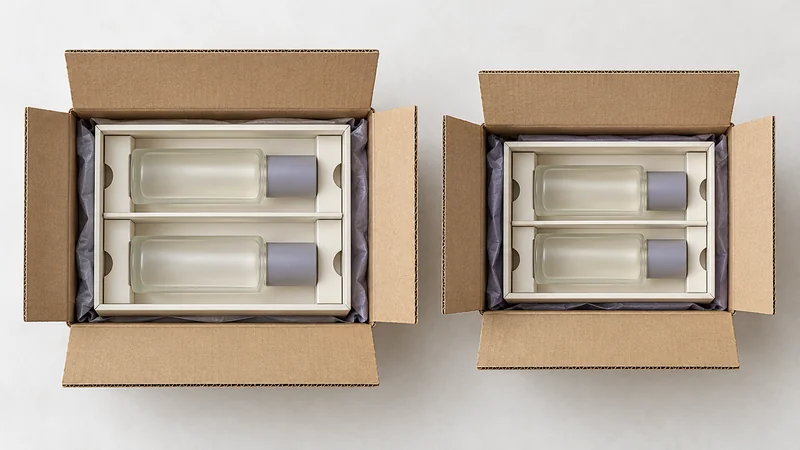
At CMIC, we can explore this through unprinted structural samples using the actual products. Fit, opening and packing can be reviewed before artwork is finalized, with appropriate testing arranged to evaluate transport protection. A more compact design can still feel generous and considered: the product fills the space, fingers reach it comfortably, and each remaining component has a purpose.
2. Recycled fiber with a documented sourcing story
As more packaging moves into paper, the origin of the fiber becomes more consequential. Recycled fiber keeps recovered material in use; responsibly sourced new fiber also has a role, because fibers lose useful papermaking properties through repeated recycling. A credible material specification distinguishes these contributions. Three familiar claims answer different questions:
- Recycled content describes material recovered or diverted from waste. Post-consumer content comes from material recovered after consumer use.
- Responsible sourcing concerns the origins and sourcing controls for forest-based materials. A label such as FSC communicates a defined sourcing claim.
- Recyclability concerns whether the finished pack can be collected, sorted and reprocessed through an established system in the market where it is discarded.
For a wrapped rigid box, the board core, outer paper and insert may have different recycled proportions. A recycled-content claim needs to identify the component or cover the finished pack on a supported basis. Brown paper, visible flecks and an uncoated texture can contribute to the design, but appearance alone tells the customer little about the actual composition.
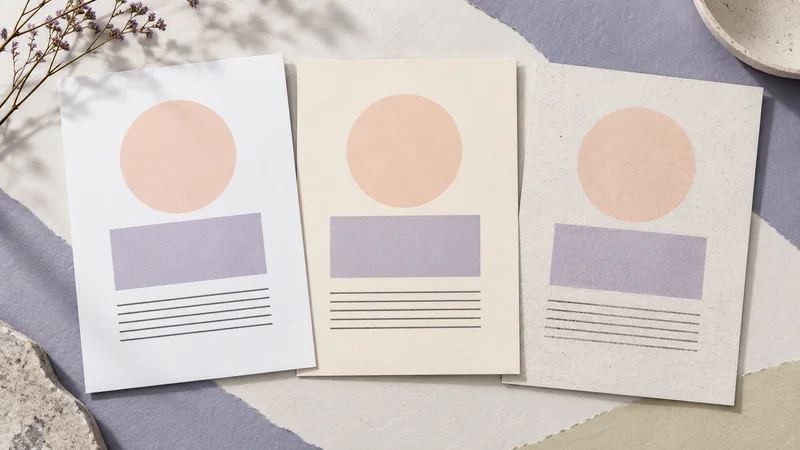
We can compare papers with the intended print and finish so the sourcing choice also works for the brand. A warmer paper shade may shift a pale cosmetic color; a more textured surface may soften fine typography. Seeing those effects in samples lets your team judge the visual result alongside the material specification. Environmental aims and considered presentation can develop together.
3. Paper-based inserts replacing selected plastic parts
SPC describes 2024 as a strong year for “paperization,” including ecommerce and secondary packaging. For many brands, the protective insert is a useful place to explore this shift: it can occupy a substantial part of the package and is immediately visible when the customer opens it.
Folded paperboard can create supporting platforms and tabs. Corrugated board adds structure through its fluted layers. Molded fiber can form shaped recesses for a product or a set of components. These options create different opening experiences, from crisp folds to a sculpted, tactile tray. The appropriate choice depends on the product’s shape, weight, fragility and surface finish.
A glass serum bottle makes the design challenge clear. The insert needs to restrain the bottle without placing pressure on the delicate dropper, and its contact surfaces should be checked for scuffing. Samples and appropriate transport testing can establish whether the complete pack protects as intended. Comparing finished options also reveals whether a substitution adds bulk or requires coatings that change its recovery route. A successful paper insert earns its place through both protection and the experience of lifting the product out.

4. Simpler constructions that support recycling
Paper recycling depends on recovering usable fibers from the finished pack. As 4evergreen’s explanation of fiber recycling describes, paper is pulped in water and screened to remove unwanted material. Coatings, laminations and other additions can make that process more demanding, while collection and sorting systems differ between markets.
A jewelry box can combine a board shell, fabric-covered foam, plastic film and magnets. If a well-fitted lid and a shaped paper insert provide the required presentation and protection, they can remove several material combinations at once. The customer also has fewer parts to separate. Adhesives and finishes still need assessment as part of the complete construction; a predominantly paper pack does not automatically qualify for every paper-recycling system.

A simpler construction leaves room for character through paper texture, color, proportion and the way a lid opens. It shifts attention toward what each extra layer contributes. For packaging made in China and sold overseas, recovery needs to be assessed where the customer will discard it. Different destinations may justify different material choices or disposal artwork, even when the brand presentation remains consistent.
5. Refill and reuse built around repeat purchases
SPC’s 2025 report identifies beauty as a category where refills have gained traction. Regular repurchasing creates an opportunity to keep a durable container in use and replace only what is needed. For the customer, the appeal can be both environmental and practical: keeping a favorite jar or dispenser and replenishing a familiar product.
A skincare starter set might pair a durable jar with a presentation box, while later purchases arrive as refills in compact cartons. The refill needs to be easy to identify, buy and use; its price and availability are part of the experience. Our paper packaging work can give the starter and refill distinct roles, with space and protection matched to each format.

The environmental result depends on actual repeat use. The comparison needs to include the durable container, all refill packaging and any washing or return transport. Pods and pouches also need their own disposal assessment. A useful evaluation compares the packaging needed to deliver the same amount of product over several purchases, using realistic refill or return rates.
For a one-off gift, reuse is a different design opportunity. A rigid box with a removable insert and practical compartments may become useful storage. That second use can be worth designing for, while any environmental comparison should reflect how people are likely to use it. Durability gives reuse a chance; a useful purpose gives someone a reason to keep the box.
6. Compostable formats chosen for a workable destination
Emerging materials are widening the possibilities. SPC’s 2025 report describes investment and development around seaweed-based films, coatings and foams. Their interest for brands lies in what a particular format can do: protect, contain or replace a component. Its feedstock alone does not establish its environmental performance or disposal route.
Bio-based describes where a material comes from. Compostable describes its ability to break down under specified conditions within a specified time. Industrial composting uses controlled conditions that differ from a home compost heap, and the finished item—including its inks, coatings and adhesives—needs evidence for the claim being made.
The Ellen MacArthur Foundation identifies systems that collect packaging with food waste as a particularly useful setting. At an event where accepted compostable packaging is collected with food scraps and sent to a suitable processor, the material has a defined job and destination. A clean, dry jewelry or skincare box has a different starting point: an established paper-recycling route may be more useful than introducing a material that customers cannot readily compost.
A credible compostable pack therefore pairs the material with accessible collection or a supported home-composting use, plus clear instructions. Confirming acceptance of the exact format matters as much as selecting the material. That gives an interested customer a practical way to realize the intended benefit.
7. Specific claims paired with useful disposal instructions
Disposal information is becoming a more active part of packaging design. In its discussion of U.S. labeling developments, SPC describes How2Recycle’s updated label and QR-compatible version, introduced in 2024. The useful direction combines clear instructions on the pack with more detailed, locally relevant information online.
Specific wording makes an improvement easier to understand. An illustrative claim such as Outer box made with 80% recycled material by weight identifies both the component and the amount; records for that finished box would need to support it. A reduction claim should similarly identify what changed and the comparison being made. The U.S. FTC Green Guides explain these distinctions and the need to qualify recycling claims to reflect access to suitable programs.
Useful disposal instructions identify the parts, any preparation or separation, and the relevant collection route. Essential qualifications belong beside the claim. The UK CMA’s January 2026 supply-chain guidance explains that customers should not have to scan a QR code to learn an important limitation, such as a need for specialist composting. A QR code can provide supporting detail, including collection locations and more specific instructions.
For the brand, this makes evidence part of packaging development. Keeping the material specification, relevant supplier records and claim wording connected helps identify when a substitution requires review before the next print run. The customer sees a clear statement; the coordination behind it helps keep that statement dependable.
The most useful trend for your brand is the one that resolves a real mismatch: excess space, an insert that is awkward to separate, unnecessary packaging on repeat orders, or an environmental claim that customers struggle to interpret. Improving that detail connects the sustainability ambition with something the customer can see and use.
If you are considering a change, talk with us about your product, current packaging and destination markets. We can develop a focused set of structural and material options, use samples to make the differences tangible and coordinate relevant testing. Your team can then weigh protection, presentation, material use and recovery together—and choose a change that earns its place in the customer experience.