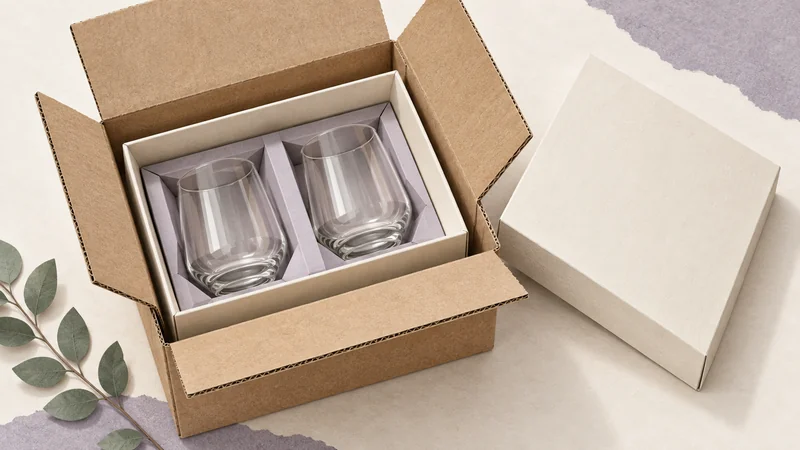
Rigid boxes are sturdy packaging boxes built from thick paperboard and usually covered with a separate decorative wrap. They are widely used for jewelry, fragrance, skincare, watches, gifts and other premium products because their construction supports a firm shape, carefully arranged interiors and distinctive opening experiences. Conventional rigid boxes retain their assembled shape; collapsible versions use folding joints to make flat delivery possible.
The appeal becomes tangible in the hand: the texture of the paper, the resistance of a lid, the first glimpse of the product and the ease of lifting it out. A successful luxury box makes these details feel considered together. Choosing one involves decisions about structure, finish, protection and cost, with the product itself providing the most useful starting point.
How a rigid box is constructed
The structural core is commonly called grayboard or chipboard. It is cut into components, formed into the required shape and secured at the joints. A thinner paper wrap is then glued around the structure, with its edges turned over to create a finished appearance. Interior lining can cover exposed board and carry another color or graphic. Printing and many decorative effects are applied to the wrapping material before the box is fully assembled. This separation between structure and surface gives rigid packaging much of its design flexibility.
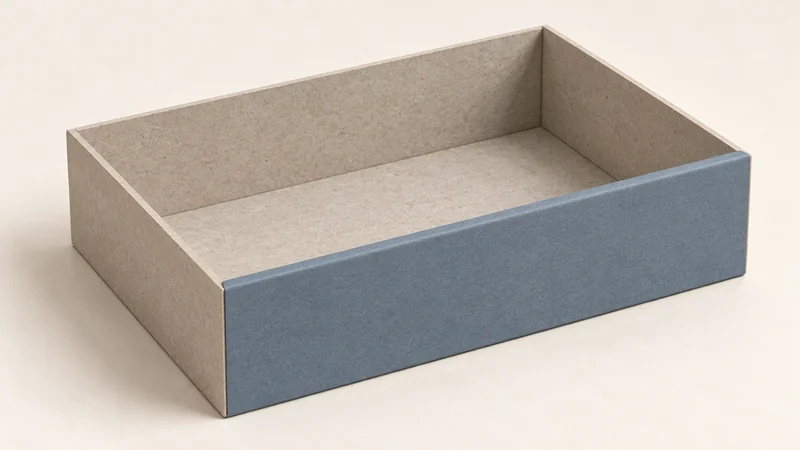
Board selection depends on the box’s size, shape and load. A small jewelry box and a broad skincare gift set place different demands on the lid: the wider unsupported panel may flex even when both use the same board. Thickness, sometimes called caliper, is different from GSM, which measures weight per square meter. Both can help describe a material, but neither alone establishes the finished box’s performance. At CMIC, we develop the board, dimensions and internal support together, so the structure feels appropriate to the product without adding unnecessary bulk.
When rigid packaging is the right choice
| Packaging format | What it offers | What to account for |
|---|---|---|
| Rigid box | A firm, persistent shape; substantial edges; varied opening movements; and room for a fitted interior. | More material and assembly work are typical. Assembled boxes occupy space before filling, and the presentation surface may need protection during shipping. |
| Folding carton | Paperboard that is cut, creased and folded into shape. It usually travels flat and can support refined printing, foil and other premium finishes. | Product support depends on the carton design and any insert. Erection and closing become part of the packing operation. |
| Corrugated box or mailer | Fluted paper between liners creates a useful structure for transport packaging. Printed corrugated formats can also provide a considered opening experience. | Board grade, flute, dimensions and internal protection must suit the shipment. Its edge thickness and folds create a different visual character from wrapped rigid board. |
Rigid packaging earns its place when the box contributes meaningfully to presentation, gifting, organization or continued use. Consider a skincare brand selling both a replacement serum and a curated gift set. A compact folding carton may serve the routine purchase well. The gift set may benefit from a rigid box that holds several products in a deliberate arrangement and feels complete when handed over. The choice follows the occasion, expected handling and available budget. A high product price alone does not settle it.
Choose a structure around the opening experience
The structure determines what appears first and how the hands move next. A lift-off lid reveals the whole arrangement from above. A drawer introduces it gradually. A hinged cover can place a message beside the product while keeping the lid attached. These differences affect display, access and packing as well as appearance.
| Style | Presentation and access | Practical considerations |
|---|---|---|
| Lid-and-base box | A separate lid fits over the base. A shallow lid gives quicker access; a deeper lid creates a longer reveal. | The user needs somewhere to place the lid. Fit, grip and lid depth determine how comfortably it opens. |
| Shoulder or neck box | An inner collar projects above the base and locates the lid. It can create a flush outer profile or an exposed band of contrasting color. | The extra component adds construction work. Collar height, alignment and the intended gap need to be resolved together. |
| Drawer box | A tray slides from an outer sleeve, using a ribbon pull, notch or another grip detail. | Opening requires space beside the box. Sliding resistance and retention matter, especially when the pack is tilted during handling. |
| Magnetic book-style box | A hinged cover opens like a book, offering space for graphics inside the lid and a broad view of the contents. | Hinge movement, lid position and magnetic closure force affect use. The complete structure contains more elements to assemble and assess. |
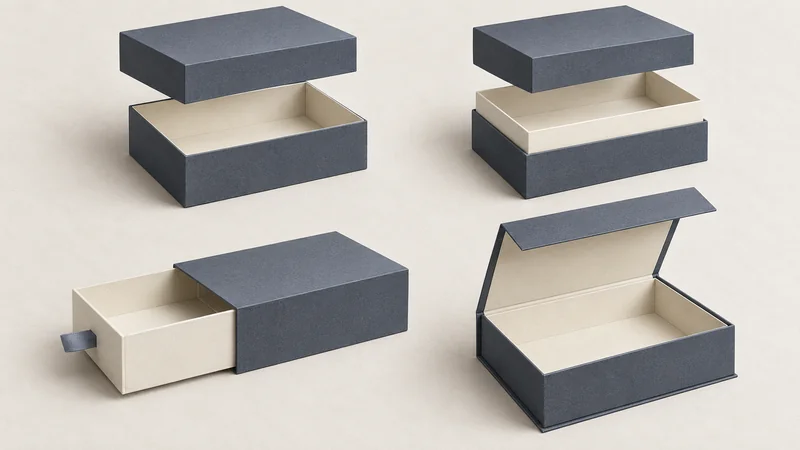
A close-fitting lift-off lid can open slowly because of surface friction and restricted airflow. The result depends on the depth of the lid, clearances, wrapping paper and finished geometry. The product’s weight matters too: a snug lid that releases comfortably from a loaded box may lift the base of a very light package. Physical samples let us compare the movement with the actual contents and develop a fit that feels deliberate while remaining easy to use.
For a shallow jewelry presentation, a removable lid can leave an uncluttered view of the piece. For a fragrance set containing a bottle and travel spray, a hinged cover might keep the arrangement and its introduction together. Either can feel luxurious. The deciding details are whether the contents remain composed, the opening makes sense immediately and the customer can reach the product comfortably.
Where collapsible rigid boxes fit
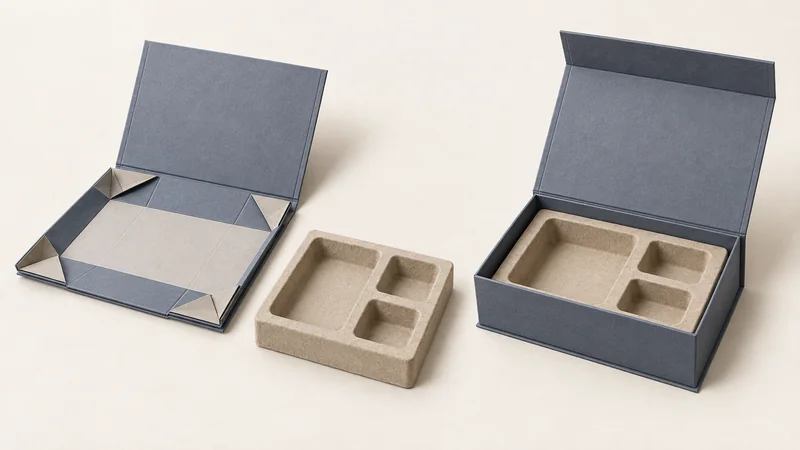
Collapsible rigid boxes combine stiff panels with folding joints. They travel flat and are erected near the point of packing, often using adhesive corner panels or another fixing arrangement. Collapsibility describes the construction rather than a single opening style; a magnetic book-style box, for example, can be developed this way. Some designs remain assembled once their adhesive corners are fixed, while others are intended to fold down repeatedly.
The potential saving lies in storing and transporting empty packaging. It comes with added joints, an erection step and a need to check that assembled corners sit squarely. A bulky insert may still occupy considerable shipping space, and the filled box will retain its full external volume. Comparing the flat box, insert and local assembly work as one package gives a much more useful result than comparing empty shells alone.
Use paper, printing and finishes to create the right character
The wrapping paper carries much of the box’s personality. Smooth coated paper provides a suitable surface for detailed graphics and strong printed color. Uncoated and textured papers make the material itself more noticeable, from a fine grain to a pronounced woven effect. Colored specialty paper can bring depth to a restrained design, while brown kraft changes the appearance of colors printed over it. Texture also affects fine lettering and decorative effects, so a paper swatch becomes more useful when paired with the intended artwork.
CMYK printing builds images from four process inks. Spot-color printing uses a separately mixed ink and can be useful for a particular brand color. In either case, paper color, absorbency and the final coating influence what the eye sees. A color reference establishes the target; a physical print on the selected material shows how that target translates. We can compare candidate papers with the same graphic and agree a physical reference under suitable viewing conditions.
Digital printing can be useful for short runs or multiple artwork versions. Offset printing is often considered when quantity makes its press setup worthwhile. The suitable route depends on the stock, artwork, color requirements and finishing sequence. This also matters during sampling: a digitally printed prototype may demonstrate layout well while leaving an offset color or production finish to be confirmed separately.
- Foil stamping adds a metallic or colored accent. Its reflection can make a small mark prominent; paper texture and artwork detail affect how cleanly it transfers.
- Embossing and debossing create raised or recessed detail. They can give a restrained design a tactile identity, with the result depending on the paper and construction beneath it.
- Matte and gloss treatments change reflection and appearance. Coatings and film laminations offer different combinations of feel and surface protection.
- Soft-touch treatments introduce a velvety feel. Handling marks and resistance to rubbing need to be assessed on the selected treatment.
- Spot UV places a gloss effect in selected areas, creating contrast with the surrounding surface. Accurate alignment matters when it follows printed graphics.
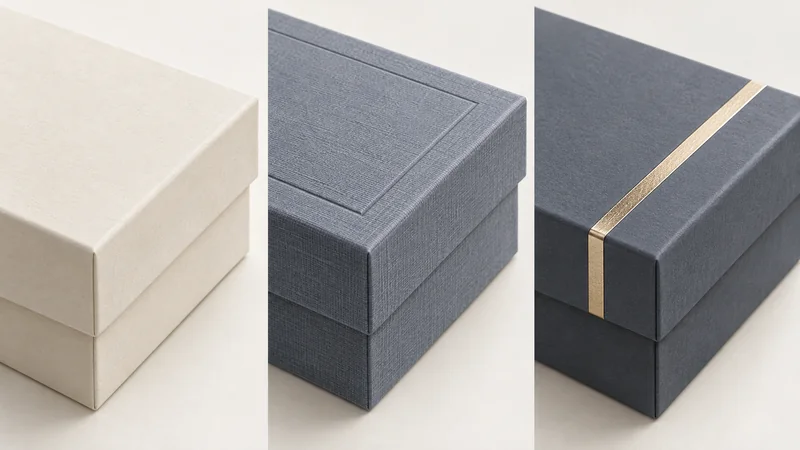
A dark, smooth lid with a small foil logo can look exceptionally calm and precise. That simplicity also makes fingerprints, rubbed edges or an uneven logo easier to notice. A useful sample comparison includes ordinary handling and contact with the intended protective packing, followed by inspection under different lighting angles. It helps establish whether the desired surface will keep its character through the actual journey to the customer.
Design the interior for secure fit and easy removal
The product’s measurements are the starting point for the interior. Space may also be needed for an insert, accessories, instructions, protective clearance and fingers. It helps to distinguish three dimensions: the product itself, the usable space within the finished box and the box’s external size. Board, wrapping, collars and inserts all occupy space. Agreeing which dimensions a drawing or quotation describes prevents an attractive exterior from concealing an interior that is too small.
| Insert route | Useful qualities | What development should resolve |
|---|---|---|
| Paperboard or corrugated | Folded platforms, partitions and supports can organize products and coordinate with a paper-based presentation. | How the folds retain the product, support its weight and assemble efficiently. Cushioning depends on the complete design. |
| Molded fiber | Formed supports can follow product shapes and create an integrated interior. | Tooling, surface texture, cavity accuracy, product variation and the quantity needed to make the route practical. |
| EVA or other foam | Cut cavities can provide defined positioning and cushioning suited to the selected foam. | Material grade, support depth, contact with the product surface, removal force and separation from the paper box. |
| Formed plastic tray | A shaped tray can arrange several items within a relatively thin structure. | Tooling, stiffness under the product’s weight, retention, appearance and how the tray will be removed for disposal. |
Fit includes both holding and releasing. A glass skincare jar can look perfectly centered in a deep cavity yet leave no comfortable place to grip it. Lowering the support at two sides may expose the jar’s body while preserving support elsewhere. Likewise, a fragrance bottle should be removable without relying on a loose cap as a handle. Finger recesses, lift ribbons and carefully chosen support points can make the interaction feel effortless.
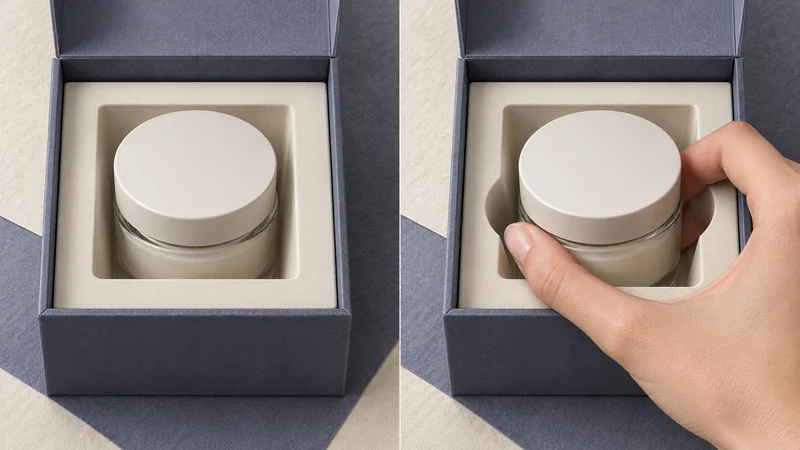
Fabric or paper facings can change the interior’s appearance and feel, while the structure underneath performs the supporting work. Contact surfaces also deserve attention: polished metal, printed labels and delicate coatings can respond differently to pressure and rubbing. CMIC can develop the interior using physical product samples, including expected size variations, and check how the product behaves when the pack is lifted, tilted, packed and opened.
Protect the product and the presentation through delivery
The rigid shell, insert and transport packaging perform connected jobs. The shell provides shape and a presentation surface. The insert restrains the product and, where designed for it, provides cushioning. An outer corrugated carton, protective spacing and other packing components manage the wider shipping environment. A firm-feeling gift box can still transmit an impact to a poorly supported glass bottle, so protection has to be assessed across the complete pack.
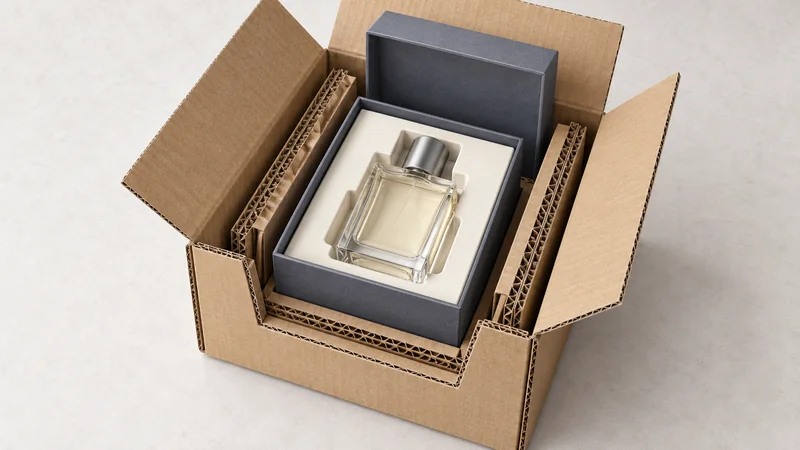
For an overseas brand sourcing packaging from China, there may be two distinct journeys: empty boxes travel to a packing site, then filled products move to stores or consumers. Empty boxes need protection from crushing, rubbing and moisture. Once filled, the pack faces different loads and movement. A master carton carrying multiple empty boxes therefore provides different evidence from a parcel containing one finished product.
We can coordinate suitable transport packaging and arrange testing around the intended distribution route. Relevant checks may include drops, vibration and compression, with the product packed in its proposed final configuration. Acceptance should cover the product’s condition and function as well as the appearance of the presentation box. A gift arriving intact but visibly scuffed may still fall short of the experience the brand intended.
Paperboard also responds to humidity, which can affect flatness and lid fit. A surface treatment does not make the entire construction waterproof. Material selection, production packing, warehouse conditions and protection from moisture belong in the delivery plan, particularly when the packaging moves between different climates.
Understand the cost beyond the empty box
A useful cost comparison follows the packaging to the point where it is ready for your operation. Alongside the finished box price, consider inserts, one-time tooling, sample development, protective packing, freight, receiving costs, storage and any local assembly. This makes it possible to compare an assembled box with a collapsible alternative on the same basis.
- Dimensions and construction. Size affects material use and packed volume. Extra collars, compartments, drawers and layers add components and assembly work.
- Quantity and artwork versions. Printing and tooling setup are spread across each run. A large combined order split among many designs can still contain small runs; shared dimensions may allow some tooling to be reused.
- Paper and decorative processes. Specialty stocks, custom colors and several finishing passes affect purchasing and production. Minimum quantities depend partly on the materials and route selected.
- Inserts, accessories and packing labor. An insert that requires several folds, a ribbon that must be tied or a multi-part arrangement can add work each time a product is packed.
- Storage and transport. Assembled rigid boxes occupy space before filling. Packed volume affects warehouse and container use; air and courier services may also use dimensional weight, a charging measure based on package size.
For illustration, suppose a layout review allows a box to shrink from 22 × 18 × 8 cm to 20 × 16 × 7 cm while preserving product fit and required protection. Its external rectangular volume falls by about 29%. Freight will not automatically fall by the same amount: protective packing, master-carton arrangement, weight and the charging basis determine the result. The useful next step is a revised carton layout, because fitting another row of boxes can matter more commercially than a small dimensional saving that leaves the packing arrangement unchanged.
A comparable quotation identifies the dimensions, board, wrap, insert, finishes, quantity per artwork, assembly state and delivery basis. It also makes clear which tooling and sampling charges are separate. At CMIC, we can develop alternatives around the parts of the design that matter most to your product: preserving a distinctive paper or opening movement while reviewing excess depth, an additional layer or a labor-intensive detail. That gives a cost discussion something concrete to work with.
Make material efficiency and recyclability part of the design
Material efficiency begins with proportions. A compact arrangement, suitable board and a purposeful insert can reduce the amount of packaging while keeping the presentation generous enough to handle comfortably. A rigid box may also be kept for storage, particularly when its size and closure are useful. That possibility is worth designing for, but expected reuse alone cannot establish a lower environmental impact.
Recycled content and recyclability answer different questions. Recycled content describes the material used to make the packaging. Recyclability concerns what can happen to the finished package after use, including collection, sorting and processing. A recycled-board core does not determine the outcome for a box that also includes coatings, adhesives, magnets, fabric or foam.
The American Forest & Paper Association’s design guidance, drawing on mills in the United States and Canada, explains that non-fiber elements can create processing challenges and that capabilities vary between mills. Such a challenge does not automatically make a package unrecyclable. Cepi’s European guidelines likewise emphasize using only the necessary non-paper constituents, facilitating separation and considering the collection and recycling arrangements in the intended market.
For a rigid-box project, useful options include a removable insert, fewer mixed-material decorations and a surface treatment selected for its actual function. A small foil mark and a full-area film laminate introduce different materials in different forms and quantities, so they deserve separate assessment. Material documentation and, where appropriate, testing can support the final choice. Consumer disposal instructions should reflect the finished construction and the systems available where the product is sold.
Turn the concept into a reliable production specification
A project can begin with a product, a reference image or a description of the experience you want. Words such as substantial, quiet or easy to open become more useful when they are connected to physical choices. CMIC can narrow those choices into a small number of structural and material directions, then use samples to resolve the questions that a rendering cannot answer.
- Establish the product and project conditions. Product dimensions, weight, fragile surfaces, accessories, quantity and distribution route shape the proposal. Brand references and a budget direction help identify where presentation deserves investment.
- Develop a structural sample. An unprinted sample can reveal the usable space, insert fit, opening movement and packing sequence. Once the geometry is suitable, the dieline provides the layout for cutting, folding and placing artwork, including areas that will turn around edges or be hidden.
- Resolve paper, color and finish. Printed samples and material trials show how the design behaves on the selected surface. Any difference between a prototype and the planned production method should be clear, along with how the remaining detail will be confirmed.
- Try the packing and delivery configuration. Packing real products exposes awkward assembly, restricted access and movement inside the box. Appropriate testing then assesses the complete shipping arrangement.
- Approve the production reference. The agreed sample, artwork version and written specification establish what is to be made. Changes to the product, materials or dimensions need a review of the affected fit, appearance and protection.
Quality becomes easier to discuss when the reference is specific. Relevant checks include square corners, flat panels, consistent wrapping, clean edges, aligned decoration, lid or drawer fit, closure function and secure product support. Agreed tolerances and appearance references give production inspection a usable basis. Checking several units helps reveal variation that one carefully handled sample may not show, especially in opening resistance and insert fit.
The schedule also needs to include decisions. Sample revisions, specialty-paper purchasing, tooling, production, inspection and transport all take their place before the packaging reaches the packing site. For an overseas launch, that required arrival date usually precedes the public launch date. We can develop the schedule around the actual route and approvals, making the consequence of a material change or late decision visible while there is still room to respond.
Develop a rigid box around your product
A convincing luxury box makes care visible in use: the paper suits the design, the opening feels natural and the product sits beautifully before coming out easily. If you have a product and a direction in mind, discuss your rigid-box project with us. Bring the references and practical constraints you already know. We can turn them into meaningful construction and material options, with a sampling and quotation approach that helps you choose confidently.