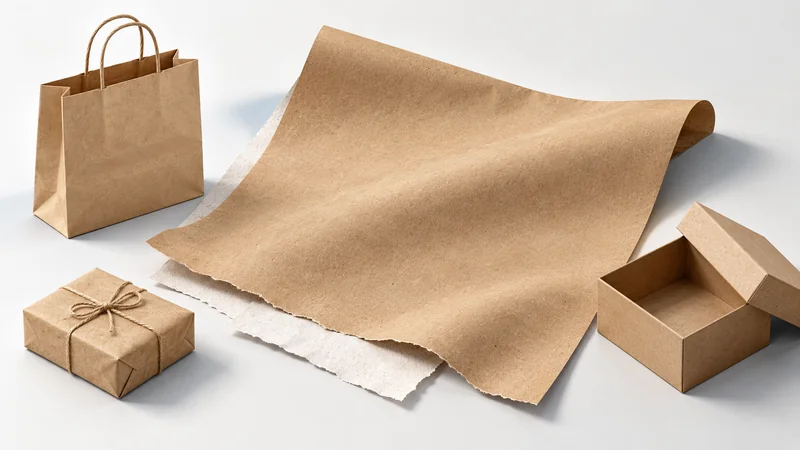
PPWR recyclability performance grades are the EU’s three classifications for packaging recyclability: A, B and C. Their design-for-recycling thresholds start at 95%, 80% and 70%, respectively. For brands commissioning paper cartons or rigid gift boxes, these grades will help determine whether a packaging design can be placed on the EU market and will inform adjustments to producer-responsibility fees.
The important distinction for a packaging purchase is that the grade concerns the recyclability of the finished construction. A box’s paper percentage, recycled-fibre content or attractive uncoated appearance cannot establish its grade on its own. The requirements cover packaging placed on the EU market regardless of origin, including packaging manufactured in China.
The adopted grades: A, B and C
Regulation (EU) 2025/40, Annex II, Table 3 establishes the following bands. They apply to the weight-based design-for-recycling assessment of a packaging unit, using the relevant packaging-category criteria and methodology.
| Classification | Assessment result |
|---|---|
| Grade A | 95% or higher |
| Grade B | 80% to less than 95% |
| Grade C | 70% to less than 80% |
| Technically non-recyclable | Below 70% |
The adopted system uses three grades. Explanations referring to PPWR grades A–E do not match this table. Below 70%, packaging falls outside the permitted recyclability grades and is considered technically non-recyclable. The market-access restrictions follow the implementation dates explained below.
Recyclability and recycled content answer different questions. Recycled content describes the material used to make the packaging. Recyclability concerns what can happen when that packaging becomes waste: collection, sorting and recovery into material of sufficient quality to replace primary raw material. A board made with recycled fibres can still be combined with a coating or adhesive that complicates its next recycling cycle. Using recycled board therefore does not automatically secure a higher grade.
What is being assessed in a paper box?
The assessment starts with the packaging unit and its components. Under Article 3, a unit includes the parts that together perform a packaging function, such as protection, containment or presentation. For a rigid box, the construction may include greyboard, wrapping paper, adhesives, coatings, a closure and an insert. A specification that identifies only the main board leaves out details that can change the recycling result.
The regulation distinguishes integrated components, which are integral to the unit and its functioning and are normally discarded with its main body, from separate components, which are completely and permanently detached and typically discarded earlier and separately. A component record should therefore explain how parts are attached, removed and discarded, alongside their materials and weights. A removable insert still needs its material and recycling route considered; the surrounding paper box does not resolve those questions for it.
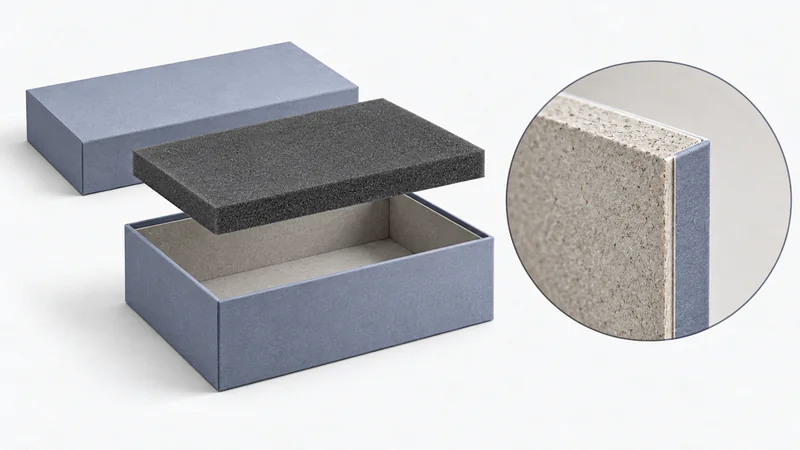
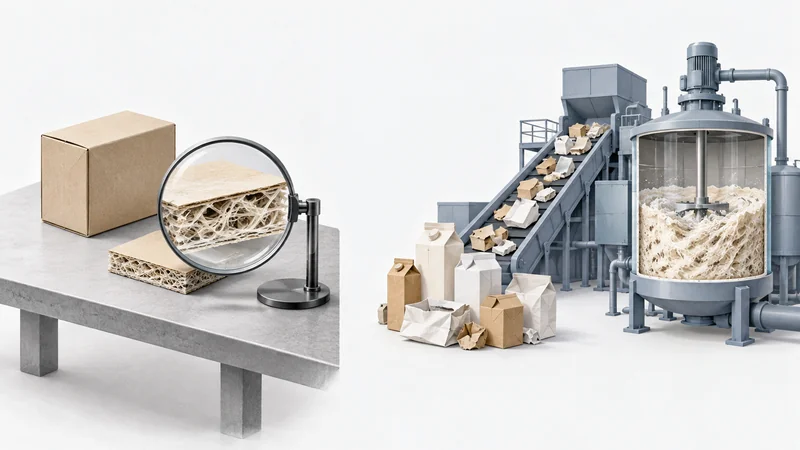
Annex II, Table 4 identifies parameters including adhesives, coatings, inks, material combinations and ease of dismantling. Their effects can extend beyond their own small weight. In paper recycling, fibres need to separate into usable pulp. A bonded layer can hinder fibre recovery, while adhesive residues can reduce the quality of the recovered material. The assessment therefore needs to consider how the construction behaves through recycling, as well as how much of each material it contains.
A weight breakdown is useful evidence, but it is not a grade calculation. Consider an illustrative fragrance gift-box assembly weighing 200 g: 150 g of greyboard, 25 g of paper wrap, 20 g of foam insert and 5 g of adhesives and coatings. Its paper-and-board share is 87.5%. That composition figure does not establish Grade B. The assessment still needs the applicable category and method, the correct treatment of components, and evidence about the finished materials’ compatibility with recycling.
The breakdown helps locate meaningful design choices. Replacing the foam insert with a paperboard cradle may simplify the material combination, but the cradle must also hold the glass bottle securely. Changing a coating may improve fibre recovery while altering resistance to rubbing. At CMIC, we can develop these alternatives alongside their component specifications, so the comparison includes protection, appearance and recycling implications before a production design is settled.
When do the grades affect market access?
The PPWR’s general application date, 12 August 2026, is distinct from the dates for its detailed grading requirements. Article 6 phases in design-for-recycling assessment, collection and sorting conditions, and recycling at scale. The deadlines tied to secondary legislation matter when planning a packaging range.
| Date or timing rule | What changes |
|---|---|
| 12 August 2026 | The general recyclability requirement applies. Commission guidance explains the transitional approach before the detailed design-for-recycling requirements apply. |
| 1 January 2030, or 24 months after the Article 6(4) delegated acts enter into force, whichever is later | The design-for-recycling requirements apply. Packaging must achieve Grade A, B or C to be placed on the market under the grade requirement. |
| 1 January 2035 | The separate-collection and sorting condition in Article 6(2)(b) applies. |
| 1 January 2035, or five years after the Article 6(5) implementing acts enter into force, whichever is later | The recycled-at-scale requirement applies in addition to design for recycling. |
| 1 January 2038 | Only Grades A and B meet the grade requirement for placing packaging on the market. Grade C is no longer sufficient. |
Article 6 includes defined exemptions, including for certain medicinal-product and medical packaging and specified dangerous-goods transport packaging. Ordinary consumer paper cartons and gift boxes follow the general schedule. Meeting a recyclability grade also remains one part of meeting the packaging’s applicable PPWR requirements.
For a brand planning to keep placing the same packaging design on the market in 2038, Grade C is a limited planning target: it can meet the initial grade threshold but will fall short of the later minimum. Grade B or A offers a more suitable direction for that design’s intended lifetime, subject to substantiation under the applicable methods.
Why recycling at scale is a separate requirement
A design assessment can show that packaging is compatible with recycling processes. Recycling at scale adds evidence that its packaging category is actually collected, sorted and recycled through installed infrastructure using established processes. A successful laboratory test on a box can inform the design assessment; it cannot establish that wider recycling activity.
Article 3’s definition sets an annual recycling threshold at EU level of 55% for categories other than wood, and 30% for wood, with verification governed by the Article 6(5) methodology. For ordinary paper boxes, the relevant figure is therefore the 55% category-level threshold. This measures a different thing from the 70%, 80% and 95% design-for-recycling thresholds for an individual packaging unit. Both dimensions enter the later assessment.
How the grades connect to packaging fees
Extended producer responsibility, or EPR, makes producers contribute financially to packaging-waste management. PPWR connects the adjustment of those contributions to recyclability grades, providing an economic incentive for more recyclable designs. The regulation harmonises the criteria for this adjustment without setting the actual fee amounts. A proposed improvement from Grade B to A therefore has no fixed EU-wide monetary saving: a cost comparison needs the relevant scheme’s applicable tariff as well as a supported grade.
What can a supplier substantiate in 2026?
The grade boundaries are already written into Annex II. The category-specific criteria and detailed methods are assigned to further legislation. The Commission’s published implementation timetable lists adoption deadlines of 1 January 2028 for the Article 6(4) design-for-recycling criteria and 1 January 2030 for the Article 6(5) recycled-at-scale methodology. A timetable entry establishes a deadline; a statutory assessment must identify the applicable legal method.
For the transition, section 6 of the Commission’s guidance points manufacturers to the previous Packaging Directive’s material-recycling requirement and the related standard EN 13430:2004 until the new design-for-recycling requirements apply. Existing assessments can therefore provide useful evidence, but their results need to retain the name and scope of the method used. A projected future PPWR grade should be identified as a projection.
When comparing supplier proposals, a meaningful assessment should make four things clear:
- The packaging covered: the exact structure and version, including the wrap, insert, closure, printing, coatings and adhesives.
- The assessment basis: the packaging category, method and version used, and whether the result is a development estimate, an industry-method assessment or an assessment under an applicable statutory method.
- The supporting evidence: component materials and weights, attachment and separation details, and relevant test or assessment results for the proposed construction.
- The changes that need review: substitutions to materials or finishes that could affect whether the evidence still represents the packaging being supplied.
This makes two apparently similar quotations easier to judge. A report on unprinted board answers a narrower question than an assessment of a wrapped, glued and finished box. Likewise, a supplier’s Grade A target is more useful when accompanied by identified design choices and evidence than when it appears as an unexplained letter beside the price.
Developing a box that keeps its purpose
The productive design question is which construction can deliver the product protection and presentation you need while supporting a sound recyclability assessment. If a film laminate was chosen mainly for its feel, a different wrapping paper may offer a pleasing surface with a simpler material combination. Its resistance to rubbing and handling still needs checking. If an insert changes from foam to paperboard, the folds and support points may need development to keep the product secure.
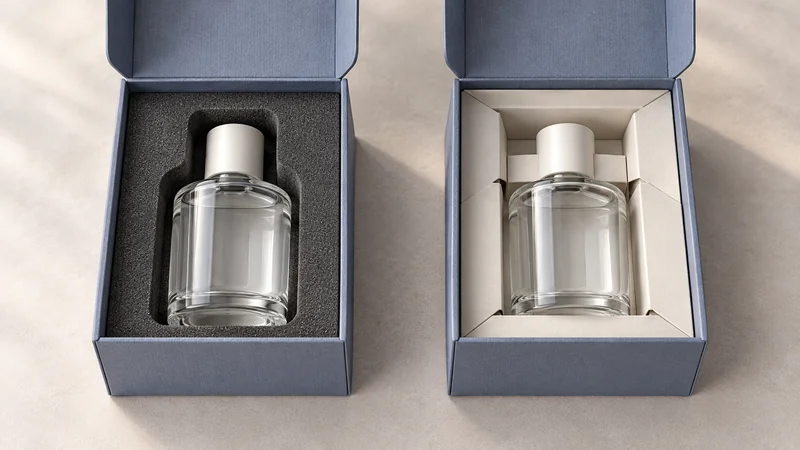
At CMIC, we can help turn those choices into comparable samples and specifications, source suitable material options, and coordinate appropriate assessment or testing. An early useful result is a pair of feasible constructions with their components, joining methods and remaining questions clearly identified. That gives your team something concrete to compare for appearance, protection, cost and recyclability before committing to production.
If you are reviewing a carton or rigid box for the EU, share your product and current packaging with us, together with the features you want to preserve. We can help develop the construction and supporting evidence so that a recyclability target becomes a practical part of the packaging decision.