
One packaging test report can support several colours, components, sourcing routes or production batches when the evidence connects them. It may contain separate results for several submitted materials, or contribute to an assessment of other packaging made with the same controlled materials. The report records what the laboratory tested; the supporting documentation explains which packaging those results can reasonably represent.
For a brand sourcing paper packaging from China for the EU market, this distinction matters when developing a range or placing a repeat order. Three gift boxes may share identical board and adhesive, allowing common evidence to be reused. A small addition to one box, such as a dyed ribbon, may introduce a material that the existing report never assessed. The useful question is how the proposed packaging relates to the tested samples.
Start with the substances and the submitted samples
For PPWR heavy metal evidence, the starting point is Article 5(4) of Regulation (EU) 2025/40. It limits the combined concentrations of lead, cadmium, mercury and hexavalent chromium in packaging or packaging components to no more than 100 mg/kg. That is one combined limit for the four substances. A report assessing them supports this particular requirement; it does not establish recyclability, food-contact suitability or conformity with every PPWR obligation.
Read the sample schedule and result pages alongside the cover. A broad description such as paper box may refer to selected submitted parts. The detailed pages should help establish which materials and colours were examined, which sample identifiers correspond to each result, and whether materials were analysed separately or combined. A photograph helps identify the object, but usually cannot establish its ink formulation, adhesive grade or material source.
At CMIC, we can begin by matching those sample descriptions to the proposed packaging’s component list, including its papers, inks, coatings, adhesives and accessories. This comparison identifies the evidence already available and the specific differences worth investigating before commissioning more testing.
Different colours: follow the pigment and material formulation
Consider a skincare brand ordering cream, burgundy and navy rigid boxes. The structure, greyboard and adhesive may be shared, while the wrapping papers use different dyes or printing inks. Even colours supplied within one ink range can contain different pigments and raw materials. Those differences can change the relevant impurity profile without producing any visible quality problem.
If one report gives separate results for all three exact wrapping materials, it can provide direct evidence for each submitted colour. If only the navy version was tested, the report may still support the common board and adhesive. The unresolved part is then the cream and burgundy wrapping material, rather than every material in all three boxes.
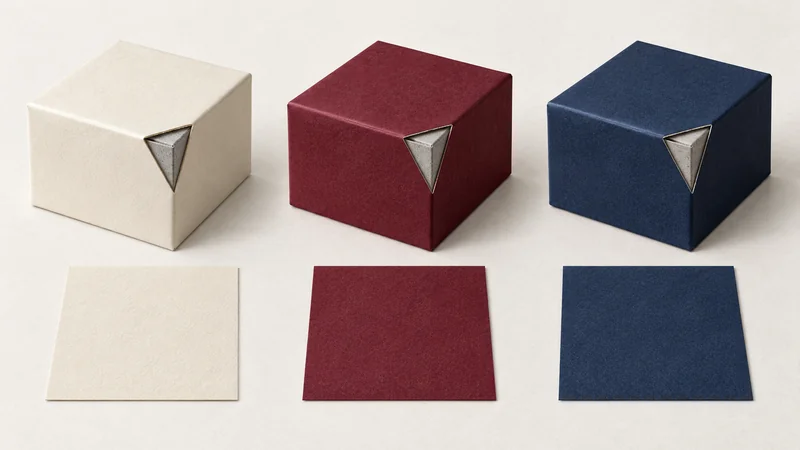
A different artwork layout using the same approved ink formulations and substrate may also be supportable within an assessed range of print coverage. Establishing that connection requires the material references and relevant application conditions. A new pigment needs a comparison of its own. Visual similarity, or simply choosing the darkest colour for testing, provides little basis for deciding which sample represents the highest concentration of the four metals.
Added components: preserve useful evidence and assess the addition
A fragrance gift box gains a fabric-covered foam insert to hold a bottle and travel spray. The outer box remains unchanged, but the insert introduces foam, fabric and a bonding adhesive. Evidence for the outer box remains useful where its materials are unchanged. The added insert needs its own connection to suitable evidence.
The insert’s supplier may already hold relevant reports or other supporting information. Check their material grades, colours, finishes and sample descriptions against the proposed insert. If those records leave a gap, further testing can focus on the unresolved materials. The laboratory should help determine how bonded layers need to be sampled and assessed; naming an assembly one insert does not explain what its test result represents.
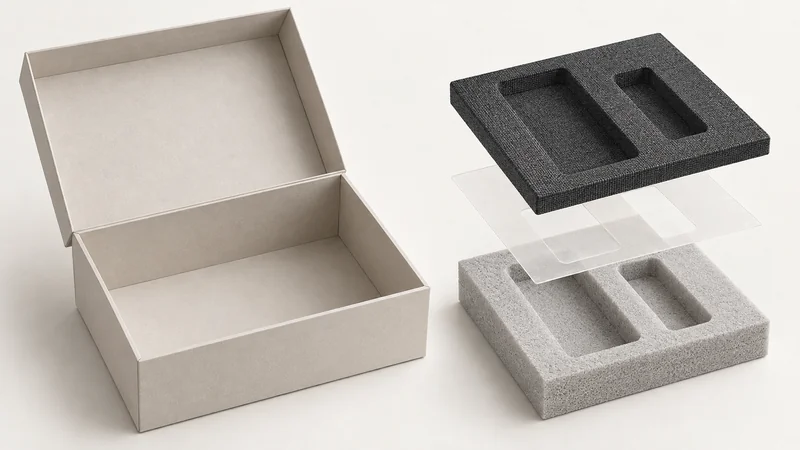
A change in component shape can be a different situation. Two insert shapes cut from the same documented foam stock may share relevant chemical evidence, provided their finishes, adhesives and other relevant conditions remain consistent. The physical difference is clear to the customer, while the substance evidence may remain applicable.
Different suppliers: distinguish the seller from the manufacturing source
Changing a purchasing agent or distributor can leave the underlying materials unchanged. For example, a brand may buy the same wrapping paper from the same mill through a different seller. Existing evidence can remain relevant if records connect the supplied paper to the material assessed. The company name on an invoice, or the applicant name on a report, does not establish that connection by itself.
A change of manufacturing source deserves a closer comparison. Two mills can supply black wrapping paper with the same weight and appearance using different fibres, dyes or additives. Likewise, a new box converter using the specified paper may use a different adhesive or coating. A specification concerned only with dimensions, colour and paper weight leaves these differences unresolved.
For justified reuse, look for a traceable match between the actual material maker, grade or formulation reference, colour and finish, and the report’s submitted sample. A new material maker may have suitable evidence of its own, allowing the assessment to be updated without repeating tests on unchanged parts. Where detailed formulations are confidential, we can help coordinate the relevant information exchange with the supplier and laboratory.
Repeat batches: continuity comes from production controls
A repeat order can reasonably draw on earlier evidence when production remains connected to the assessed specification. Useful records include the approved list of materials and sources, material lot references, production batch identification and arrangements for reviewing substitutions. These records explain why a later delivery still belongs within the conditions represented by the tested samples.
This reflects the PPWR’s approach to ongoing production. Article 15(4) requires procedures to keep series production in conformity, taking account of changes in packaging design or characteristics and relevant technical specifications. Where conformity could be affected, the manufacturer must reassess it. That reassessment can draw on existing evidence as well as any additional investigation the change requires.
A controlled specification also needs to address meaningful variability. Recycled feedstock, pigment inputs or undocumented material substitutions can affect the basis for relying on an earlier result. Further confirmation testing should reflect the material risks, supplier controls, production variability and applicable requirements. The report’s date is useful context, but the central question is whether current production still fits the conditions that supported the earlier assessment.
Representative samples and combined samples answer different questions
Representative testing uses selected samples to provide evidence about a defined range. The selection needs a reason connected to the substances being assessed. For a printed-paper sample, higher coverage of an unchanged ink formulation might be relevant to selecting a conservative example, subject to the substrate and test preparation. Introducing a different pigment changes that reasoning. Ask the laboratory to explain which variants the proposed sample can represent, the basis for that judgment and its limits.
Several separate results in one report are another useful arrangement. A laboratory can report individual results for several submitted colours or components within one document. Each result remains linked to its own sample. The number of PDFs therefore tells you little about the breadth of the actual testing.
Combined or composite testing involves mixing materials or specimens into a test portion. This changes what the result describes: a mixture can have a low average concentration while one constituent has a much higher concentration. That matters when assessing a requirement that applies to packaging or packaging components.
An illustration of dilution: assume a mixture contains 98 g of board with a four-metal total of zero and 2 g of ribbon with a total of 400 mg/kg. Its calculated mass-weighted concentration is 8 mg/kg: 2% × 400 mg/kg. The mixture average is below 100 mg/kg, while the ribbon itself exceeds that limit. These assumed figures show why a passing average alone cannot establish that each component meets the requirement.
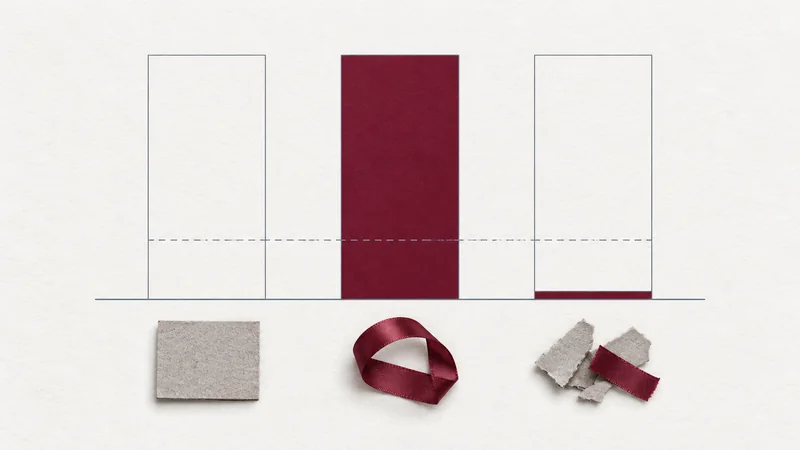
Composite testing can still be useful within a justified laboratory plan, including for screening. Known proportions, suitable analytical sensitivity and appropriate interpretation may allow useful conclusions about individual constituents. Ask what the method can establish and whether any individual analysis remains necessary. A result reported as not detected must also be read with its stated detection limit; it does not mean a measured concentration of zero.
Make the coverage decision clear before ordering more tests
PPWR Annex VII places test reports within wider technical documentation covering the packaging, component materials, applicable requirements and an assessment of non-conformity risks. It also requires manufacturing controls that keep production aligned with that documentation. A practical way to connect an existing report to a proposed range is to record the following:
| Connection to establish | Useful supporting records |
|---|---|
| What was actually tested? | Report number, sample identifiers, material and colour descriptions, and whether test portions were separate or mixed. |
| Which ordered versions use those materials? | Packaging revisions and component lists linked to material makers, grades or formulation references, colours and finishes. |
| Why can the results support other versions? | A comparison of relevant differences, supplier evidence and a justified sampling rationale, with laboratory input where needed. |
| How will repeat production remain consistent? | Approved material and source specifications, batch traceability and arrangements for reviewing changes. |
The conformity assessment remains the responsibility of the manufacturer as defined by PPWR. For packaging or packaged products made under a brand’s own name, that role may belong to the brand commissioning them, even when a Chinese factory physically makes the box. Supplier documentation and laboratory work support the assessment; they do not transfer that responsibility.
We can help obtain material details, map the proposed variants against existing evidence and coordinate laboratory review of unresolved questions. The useful intermediate result is a clear scope: which results can be reused, which differences can be resolved through further documentation, and which need targeted testing. A testing quotation then has a reason for each proposed test.
For the wider documentation picture, see our guide to PPWR testing and reports for paper packaging. If you already have a report, share it with us alongside the packaging details and the changes you are considering. That gives us a starting point for identifying where the existing evidence remains useful and what needs to be resolved for your range.


