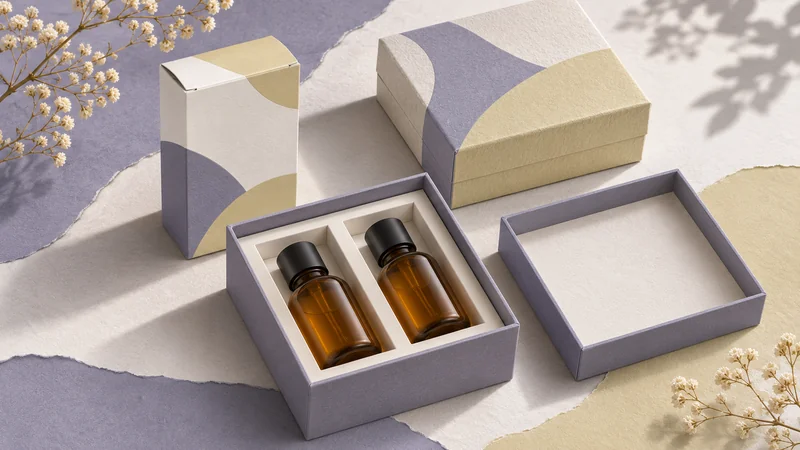
Some of the most interesting packaging changes happen before a customer lifts the lid: an insert grown into shape, a box fitted more closely around its contents, a structure that arrives flat. Others emerge afterward, when a container is refilled or a gift box becomes useful storage. Each offers a different way to rethink the resources packaging uses.
For a brand, choosing between them starts with the product and its journey. Compare options against the same protection requirements, and include the insert, presentation box and shipping packaging. A change that removes material from one component may add it elsewhere. These eight approaches help reveal where a worthwhile improvement could come from.
1. Grow protective inserts with mycelium
Mycelium is the network of fine threads produced by fungi. In mycelium composites, those threads grow through plant-based particles and bind them together. Manufacturers grow the material in molds and dry the finished parts, creating shapes that can serve as protective packaging inserts.
For a dry gift set or home accessory, a molded cradle can hold the product while making the material itself part of the presentation. Its visible fibers and natural variation may suit a brand that wants customers to notice how the packaging was made. The shape still needs to support the product in the right places and allow it to lift out comfortably.
A useful sample assessment covers surface cleanliness, rubbing against the product, odor, dimensional fit and behavior under expected humidity. Protection should be evaluated with the complete pack under relevant handling and transport conditions. An attractive material sample cannot show how a heavy product will behave inside the finished package.
Any compostability statement needs evidence for the finished component, including any coatings or adhesives, together with disposal instructions appropriate to the facilities customers can use. Mycelium offers an interesting material route; its environmental value still depends on the actual construction, production and end of use.
2. Let molded fiber combine support and presentation
Molded fiber turns fiber pulp into shaped components. A well-developed insert can combine product support, spacing and presentation in one part, potentially replacing a collection of pads, dividers and loose filling.
Consider a skincare set containing a short jar and a tall tube. A shaped tray can hold them at deliberate heights, give each item a stable position and leave room for fingers. That makes the opening easier to understand and can reduce the extra pieces needed to create a tidy arrangement.
The tray and outer box need to develop together. Broad walls or generous spaces between cavities can enlarge the box, while an overly tight cavity can make removal frustrating. Surface texture also affects both appearance and contact with the product. At CMIC, we can develop and compare suitable insert layouts alongside the box structure, so the sample shows protection, access and presentation as one design.
3. Use recycled fiber where it suits the construction
Recycled paper and board bring recovered fiber back into use as packaging material. For paper packaging, there are several places to consider it: the structural board, the wrapping paper, the insert and accompanying printed pieces. Each has a different job, so the material choice can be made component by component.
A premium rigid box, for example, can use a board containing recycled fiber beneath a separately selected paper wrap. The wrap might provide a smooth printed surface or a visibly textured finish. Recycled-content papers come in different grades and appearances; the choice should account for stiffness, folding, printing and the visual consistency the design needs.
A clear specification identifies the board, wrap and insert separately, with the basis for any recycled-content claim. This makes material substitutions easier to assess and keeps a claim about one component from describing the whole package. Production-representative samples are especially useful for pale colors, fine printing and designs where the paper surface is a prominent feature.
4. Reduce empty space and unused shipping volume
Size influences several things at once: board area, insert size, filling material and the space occupied during storage and transport. Redesigning the structure around the product can therefore reveal savings across the complete package.
An ecommerce accessory might sit inside a tall presentation box that then needs a much larger shipping carton. A lower-profile arrangement, with a secure insert, may allow a closer-fitting mailer. The useful comparison includes both versions fully packed, so the effect on shipping protection is visible.
Some space performs essential work. Fragile edges need clearance, cushioning needs room to function, and customers need access to remove the product. Structural development should identify which spaces protect or help handling, then reduce the spaces that serve no useful purpose.
Flat-delivered structures offer another opportunity. A collapsible rigid box can occupy less volume before filling, which may matter when empty boxes travel from the manufacturer to a brand’s packing location. Compare that benefit with the materials, closures and assembly the design requires. The empty-box journey and the finished-product journey are separate parts of the decision.
5. Simplify the package for separation and recovery
A package’s end of use is partly decided at the design stage. Board, wraps, windows, inserts, ribbons and closures determine what the customer can separate and what a local collection system can accept. Simplifying those combinations can make the disposal route easier to understand.
A permanently bonded foam insert, for example, creates a different separation task from an insert that lifts out cleanly. A suitable paper-based insert may simplify the material mix further. These changes need to preserve the support and surface protection the product requires, so material substitution and structural testing belong together.
Recycled content describes where material comes from; recyclability concerns what can happen after use. Both deserve attention. Check the complete construction against the collection and processing routes relevant to the intended market, then give customers concise instructions for any necessary separation. A paper appearance alone cannot establish that route.
6. Design the refill and the lasting container together
A refill system lets a durable container stay in service while replacement product arrives in another format. For a skincare jar with a replaceable reservoir, the outer jar can continue providing handling and presentation through successive purchases. The refill still needs suitable protection during transport and storage.
The environmental balance depends on the resources used to make the lasting container, the refill packaging, delivery arrangements and how many refills people actually use. Ease matters here. A refill that is difficult to recognize, open or fit may interrupt the repeat use on which the design depends.
Paper packaging can support the system through compact refill cartons, sleeves, multipacks and clear product information. We can develop these around the product’s refill format, including how customers distinguish an initial purchase from a replacement. The package should help the repeat purchase feel straightforward while protecting the refill through its own journey.
7. Put returnable packaging on a workable route
Returnable packaging is designed to circulate: it delivers something, comes back and goes out again. Its suitability depends heavily on the route. A regular exchange between known locations gives the packaging a clearer path back than a one-off shipment to a distant customer.
For a brand moving demonstration kits between a showroom and its stores, a reusable case can be designed around repeated opening, replaceable product inserts and an agreed return point. Returning the case on an existing scheduled journey may also avoid arranging a separate trip just to recover it.
The structure needs to suit repeated handling, especially at corners, hinges and closures. Inspection, cleaning where needed, lost packs and eventual replacement also belong in the comparison. A stronger build earns its additional material through successful circulation. Establishing how the pack returns is therefore an early design decision, alongside its shape and construction.
8. Give a multi-use box a specific second life
A multi-use box stays with the customer and takes on another role. Gift packaging offers familiar possibilities: a jewelry tray, a small organizer or a storage box for items used together. The second role becomes more convincing when it shapes the original design.
A jewelry gift box, for example, could have a display pad that lifts out without damaging the interior, leaving a shallow lidded tray for everyday pieces. A removable paper sleeve can carry seasonal graphics while the lasting box has a finish the customer would enjoy seeing on a dresser.
Proportion and small details matter. The box needs useful internal space, a stable base, a comfortable opening and an interior that still looks finished after the original insert is removed. A very deep cavity or prominent product-shaped recess may make the second use awkward.
Try the sample in the setting where it is meant to live: on a shelf, inside a drawer or beside a mirror. Does it fit, and is it pleasant to use? A stronger case for multi-use design comes from filling an existing need, retaining the original structure and keeping added material modest. Simply making a box heavier cannot establish that customers will keep it.
Choose the change that matters for your product
These approaches can work together. A closely fitted box might use recycled-content board and a removable molded-fiber insert. A refill carton might arrive flat and use a simple material construction. Begin with the main opportunity in the current package—excess volume, several protective components or a recurring purchase that could support reuse—then assess which changes address it.
At CMIC, we can help turn that opportunity into suitable material and structural options, develop samples and coordinate relevant testing. Comparing complete samples around the same product gives you something concrete to judge: protection, appearance, handling, assembly and what the customer can do with the packaging afterward.
If you are reconsidering a current pack or developing a new one, talk with us about the product and the change you want to achieve. Its dimensions, sales channel, delivery destination and intended use after opening provide a useful starting point for choosing a route worth developing.