Biodegradable describes a material that microorganisms can break down under suitable conditions. Compostable adds requirements for biodegradation, physical disintegration and compost quality within defined test periods. Compostable materials are therefore biodegradable under their specified composting conditions, but a material described as biodegradable is not necessarily compostable.
For a brand choosing packaging, this distinction matters at the level of the finished package. A paper box can include a clear window, a protective coating, printing and several adhesives. Those details affect what a claim can cover and how customers should dispose of the packaging after opening it.
| Term | What it describes | What a packaging buyer needs to establish |
|---|---|---|
| Biodegradable | Biological breakdown through the action of microorganisms. | The environment, timescale and extent of breakdown supported by the evidence. |
| Compostable | Biodegradation and disintegration under specified composting conditions, together with compost-quality requirements. | The applicable composting system and whether the finished package meets the relevant requirements. |
| Bio-based | Made wholly or partly from biological resources, such as plants. | The material’s origin and content. Its disposal properties need to be established separately. |
Biodegradation involves microorganisms using the material and converting it into simpler substances. In compost with sufficient oxygen, the outputs include carbon dioxide, water and microbial biomass. Temperature, moisture, oxygen and the material’s structure affect how readily this happens. A brittle film that crumbles into smaller pieces may simply have fragmented. Its disappearance from view does not demonstrate that microorganisms have consumed it, which is why compostability assessment examines both biological conversion and physical disintegration.
CSIRO’s explanation of biodegradable and compostable plastics also separates biodegradability from material origin. A plastic made from plants can be non-compostable, while a biodegradable plastic can contain ingredients derived from petroleum. Choosing a window film made from renewable resources therefore answers a sourcing question; that choice alone does not establish how the film will behave after disposal.
Compostability makes the performance question more precise: can the item break down sufficiently within a specified composting process while meeting requirements for the resulting compost? BPI’s explanation of certified compostability describes three connected areas of assessment:
- Biodegradation: testing establishes biological conversion of the material under defined conditions.
- Disintegration: the item must physically break apart sufficiently during the specified composting test. A material’s chemistry alone cannot establish how a thick or complex finished item will disintegrate.
- Compost quality: assessment includes effects on plant growth and limits on specified substances, such as regulated metals.
Common references include EN 13432, the European standard for packaging recoverable through composting, used for industrial compostability assessment. In North America, ASTM D6400 addresses plastics intended for industrial composting, while ASTM D6868 addresses finished items incorporating polymers as coatings or additives with substrates such as paper. A standard sets assessment criteria; certification verifies identified products under a particular scheme. The BPI certification overview, for example, distinguishes its commercial and home compostability programs.
A scheme’s product eligibility also matters. BPI limits eligibility to items associated with desirable composting feedstocks such as food scraps and yard trimmings. Before choosing a certification target for a gift box or cosmetics carton, establish whether the scheme covers that intended use.
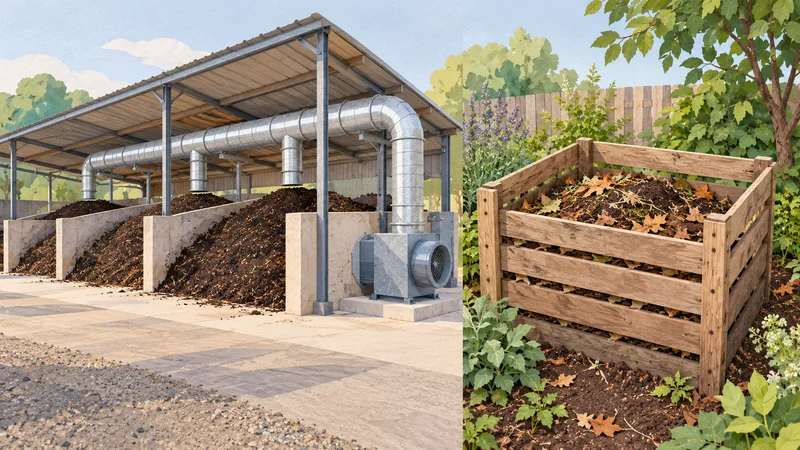
Industrial and home compostability require different evidence. Industrial composting manages sustained heat, moisture and aeration, creating conditions a garden heap may not reproduce. Home composting generally operates at lower, more variable temperatures. Evidence for industrial compostability therefore does not establish home compostability. A product verified for home composting still belongs in a working compost system, with suitable moisture, airflow and handling according to its instructions.
There is no single decomposition time for everything called compostable. Test periods belong to a particular standard, product specification and environment. Thickness, formulation and conditions can change the result. A test deadline is not a promise that a discarded box will disappear within the same period in a garden, landfill or seawater; those environments differ from the system assessed.
These distinctions become useful when reviewing an actual packaging design. Consider a skincare carton with a clear window, printed surfaces, a protective coating and glued seams. A compostability certificate for the window film is useful evidence for the film specified in that document. It does not automatically cover the coating, adhesive or assembled carton. If the aim is a certified compostable carton, the finished construction needs to fall within the certification’s scope, including its relevant materials and dimensions.
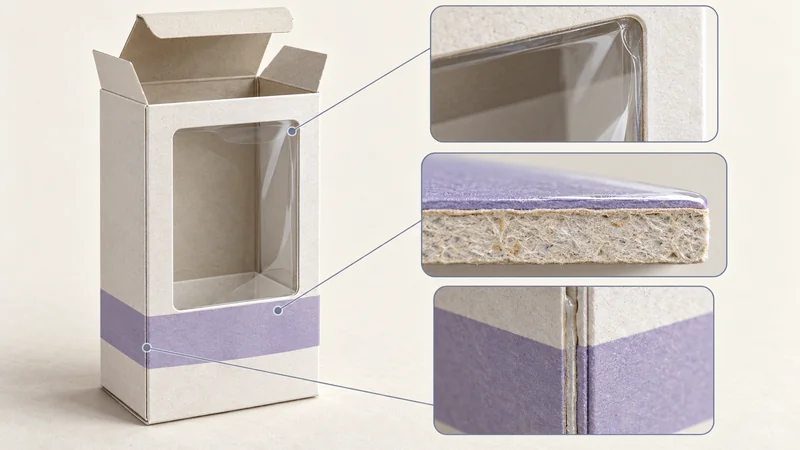
How the parts come apart also matters. A removable conventional foam insert can have separate disposal instructions while the box is assessed on its own. If that box qualifies as compostable, the claim needs to identify the box and make removal of the insert clear. A bonded window or laminated surface stays with the box and belongs in the assessment of that construction. Separation instructions become useful when the design makes separation straightforward.
At CMIC, we can work through these decisions before the structure and finish are fixed. That can include reviewing layers and components, checking what suppliers’ documents cover, comparing suitable material options, and coordinating appropriate testing or certification work. A useful early result is a shared specification connecting the box’s appearance and protective function with the evidence needed for its disposal claim. Later changes to a coating, adhesive or film can then be checked against that specification.
Certification and collection answer different questions. Certification supports performance under specified conditions. The local collection program and receiving facility determine which items they accept. A household food-waste bin is the start of a collection service; its presence does not establish that compostable packaging is accepted. The service must collect that type of packaging and send it to an accepting facility. Consequently, a box sold in several countries may need different disposal instructions even when its construction stays the same.
For a clean, dry cosmetics carton, it often makes sense to investigate paper recycling first. Where the finished construction is accepted, recycling recovers fibers for further use. Coatings, windows and other components need consideration because compostability does not establish recyclability. For packaging likely to be soiled with food and collected alongside food scraps, compostability can serve a more direct purpose when the collection service accepts the item. Its usefulness comes from fitting the waste stream the packaging will actually enter.
These are choices about a disposal route, rather than an overall environmental ranking. The amount of material used, protection against product damage, manufacturing and transport still contribute to the wider packaging decision. A compostable construction earns its place when its verified properties serve a realistic use and disposal situation.
The wording on the package should carry the same precision as the evidence. It should name the part covered, distinguish industrial from home composting, and explain necessary separation and limits on collection access. For example, a certified compostable inner bag does not justify describing an entire gift set as compostable. A claim confined to the bag, with its specific disposal route, gives the customer usable information. Certification marks and final wording also need to follow the applicable scheme and destination-market requirements.
If you are weighing a compostable construction for a custom box, talk with us about your product, its sales markets and the appearance you want. We can help compare materials and structures, review the available evidence and coordinate appropriate assessment, so the finished design and its disposal instructions are developed together.