Packaging is first placed on the EU market when it is first supplied for distribution, consumption or use there in a commercial activity. The definition covers packaging supplied empty or with a product. For ordinary imports of finished packaging or packaged products from China, the customs process for release for free circulation is usually the central reference point. Distance sales and supplies involving further manufacturing can require a different analysis.
The Packaging and Packaging Waste Regulation (PPWR) has generally applied since 12 August 2026. For a brand reviewing orders and stock in October 2026, the useful question is which packaging units were already placed before the relevant requirement began to apply. Some requirements have later dates or their own transitional rules, so a timing conclusion needs to identify both the packaging concerned and the requirement being assessed.
Article 3 of the PPWR distinguishes first placement from subsequent making available. The Commission’s Blue Guide explains that placement concerns individual products, rather than a design or model, and happens once across the Union. Consequently, an approved box design can have units placed on different dates. A product can also travel in several packaging units: its sales box and an independent transport carton may have different supply histories.
A commercial supply can involve payment or be free of charge. It can follow an offer or agreement transferring ownership, possession or another right, without immediate physical handover. However, the manufacturing stage must have been completed. As Sections 2.2–2.3 of the Commission’s 2022 Blue Guide explain, an agreement to manufacture something later does not itself place those future units on the market.
This gives familiar project dates different evidential value. Sample approval establishes a version. A purchase order and deposit may establish a commitment to future production. A production record shows when identified units were made. A bill of lading records shipment. Each can help reconstruct the journey, but none automatically establishes first EU placement. Likewise, an Incoterm allocates delivery responsibilities, costs and risks; it does not independently settle the PPWR placement date or legal roles.
For imports, the Commission’s August 2026 FAQs, Section X, question 12, say that placement is generally considered to occur when products are declared for release for free circulation—the customs procedure allowing imported goods to circulate freely in the EU after import formalities. The same answer expressly recognises that placement and actual release may occur at different times. Keep both the declaration and release records. If those events fall on opposite sides of a deadline, the supply arrangement needs examination before assigning a date. Customs release also does not, by itself, prove conformity with packaging requirements.
For products packed in China, follow the finished goods into EU distribution. Consider an EU skincare brand ordering 12,000 finished gift sets in May. The boxes are assembled and filled in China. Of those sets, 4,000 are imported, released for free circulation and supplied to an EU distributor in July. The other 8,000 remain in China and are first imported and supplied in September, with no earlier qualifying EU distance-sale offer or supply.
On those facts, the July quantity was placed before 12 August; the September quantity was placed afterwards. The shared purchase order, artwork and production run do not give the later units the earlier units’ status. For the September quantity, the assessment must address the requirements applicable at its placement. For the July quantity, the records should establish which units had already entered the distribution chain.
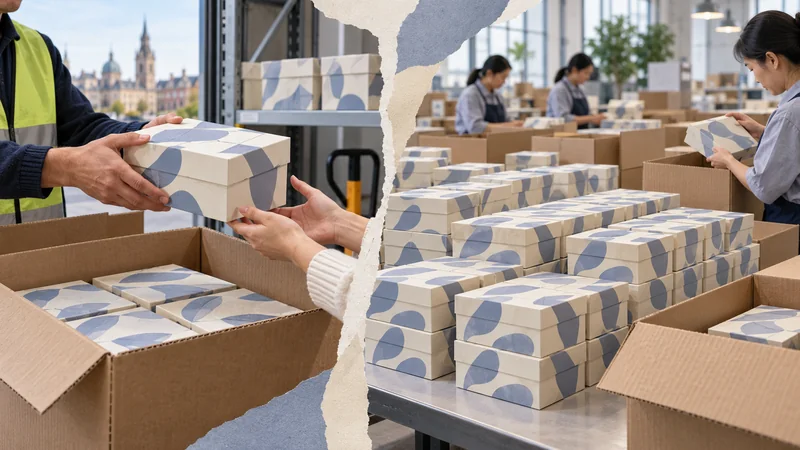
Direct online sales can bring placement forward. An overseas seller’s genuine offer of already manufactured, finished packaged goods directly to EU end users can constitute making available before the goods reach customs. The August FAQ expressly identifies distance sales as a case where placement can precede release for free circulation. An order accepted before manufacture is complete needs a different assessment: the early order date alone does not establish placement. Nor does launching a product page assign that date to future production of the same design.
The parties’ legal roles help explain these distinctions. A brand commissioning packaging or a packaged product under its own name can be the PPWR manufacturer even when a factory in China physically makes it. The PPWR importer is an EU-established person that places packaging from a third country on the market. Identify these roles from the actual arrangement: manufacturing origin, the company paying freight and the warehouse address do not, individually, answer who bears each obligation.
For empty boxes imported for EU filling, establish whether the supplied box has completed manufacture. Article 3 expressly includes empty packaging, so filling is not a universal starting point. The Commission’s guidance normally identifies the filler as the manufacturer of sales or grouped packaging where it applies the final processing steps and then places the packaging or packaged product on the market. These principles need to be read together: a finished box supplied for its intended use presents different facts from components supplied for further manufacture.
Consider an EU jewellery brand ordering 6,000 drawer boxes from China. Manufacture is completed in July: each box has its final covering, printed artwork, fitted insert and working drawer. The identified batch is then supplied to the brand for use with its jewellery, declared for release for free circulation and released in July. The boxes go into the brand’s EU warehouse. In September, staff put the intended jewellery into the inserts and close the drawers. No further assembly, printing, coating or material change is planned or performed.
Applying Article 3 and the August FAQ’s general import principle, our reading of this defined transaction is that the completed empty boxes were first placed in July. Manufacture was complete, an identifiable batch was supplied for EU use, and its ordinary import occurred that month. September’s filling uses those boxes as intended; it does not by itself create another first placement. The brand’s possible status as PPWR manufacturer identifies responsibility for conformity, but does not by itself establish that the empty boxes were still unfinished when supplied.
The scope of that conclusion matters. Section 5 of the Commission’s June 2026 guidance expressly discusses sales and grouped food-contact packaging being placed when filled insofar as final processing, such as sealing, may affect compliance. Neither that passage nor the August FAQ expressly decides the completed non-food rigid-box scenario. The July conclusion above is an application of the general rules to the stated completion and supply facts.
Changing what happens after import changes what the July records establish. Three variations are particularly relevant to custom boxes:
- The box still requires manufacture. If cut board panels and covering paper arrive in July and are bonded and assembled into drawer boxes in September, the July records concern those inputs. The resulting box’s first placement must be established after its manufacture is complete and it is first supplied for EU distribution, consumption or use. Importing the parts earlier does not establish earlier placement of the finished box.
- A completed box is subsequently modified. Replacing the specified paper insert with a plastic one, or adding a laminated finish, can change the conformity assessment. Article 15(4) requires manufacturers to reassess where relevant changes affect conformity; Article 21 can give an importer or distributor manufacturer obligations when it makes a modification that could affect compliance. The original placement record establishes the history of the original version. The changed configuration needs its own review, without assuming that every alteration automatically creates another first placement.
- Another packaging unit is added. If the brand later adds a separate ecommerce mailer, that mailer has its own supply history. Its placement date must be established independently, even though it now travels with the July gift box.
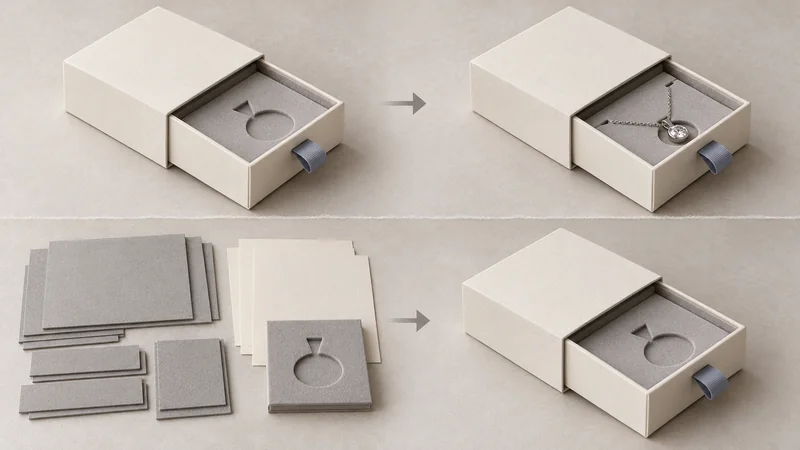
At CMIC, we can help establish these facts by documenting the supplied version, its components and the operations left for the filler. A comparison of the delivered empty-box sample with the intended packed configuration shows whether filling simply uses the finished box or involves further manufacture or modification. Linking that specification and sample approval to the production batch gives the brand and importer a concrete basis for assessing completion and timing.
Existing EU stock needs to be assessed through its supply and customs history. For an importer, finished goods acquired and imported for EU distribution can already be placed while awaiting their first onward sale. A different situation is stock held under customs warehousing while its destination remains undecided, with no qualifying offer or supply for EU use. The distinction is what has happened to the goods commercially and under customs procedures. The warehouse address and an “unsold” inventory status cannot establish that distinction.
| Stock situation | What determines the timing |
|---|---|
| Stock supplied to an EU distributor or retailer | Establish the earlier first supply and the quantities it covered. Subsequent resale normally constitutes further making available, rather than another first placement. |
| Finished goods bought for EU distribution, ordinarily imported and released for free circulation, but still unsold in the importer’s warehouse | These are normally already placed through the import and supply arrangement. A later wholesale or retail sale is not needed to start the clock. Link the batch to its purchase, supply and customs records; the absence of an onward invoice does not make it unplaced. |
| Goods held under customs warehousing while EU distribution or re-export remains undecided | Where there has been no qualifying offer or supply for EU use and no release for free circulation, storage alone does not establish placement. Confirm the customs procedure and the commercial position. A qualifying distance-sale offer to EU end users can bring placement forward even before release. |
| Finished goods sent from outside the EU to an EU fulfilment provider for EU distribution | The Blue Guide treats goods transferred into this distribution arrangement and released for free circulation as placed at release, even if consumer sales begin later. The overseas seller’s continued ownership does not defer placement until checkout. |
| Goods merely transiting the EU towards a non-EU destination | Where goods remain in transit without release for free circulation or placement on the EU market, their physical presence in the EU does not establish placement. |
For packaging already lawfully placed before a relevant requirement applies, recital 14 of the PPWR recognises continued distribution of stock without imposing the new sustainability and labelling requirements simply because resale occurs later. The August FAQ likewise confirms that packaging placed before 12 August 2026 can remain on the market. This is why a dated distributor transaction linked to identifiable quantities is useful. A general statement that the packaging was “made before August” establishes something different.
There is also a useful route for packaging produced before 12 August but still unplaced at that date. In Section X, question 5, the August FAQ allows the identification information required by Articles 15(5) and 15(6)—the packaging identifier and manufacturer’s name and address—to be provided through an accompanying document for that existing stock. An older printed box therefore need not automatically be scrapped or reprinted to resolve those identification omissions. For packaging manufactured after 12 August, the FAQ limits use of accompanying documents to situations where the information cannot be affixed as required.
That documentation option addresses identification; the packaging must still meet the other requirements applicable to it. The Commission’s food-contact PFAS guidance illustrates the distinction: earlier production does not provide a stock-exhaustion period for packaging first placed from 12 August 2026. A document can supply missing identification information, but it cannot resolve a failure to meet an applicable substance restriction.
Later requirements must be assessed against their own dates and conditions. For example, Article 25’s restrictions on the specified packaging formats and uses begin on 1 January 2030. Certain labelling requirements have later, implementing-act-dependent dates, and Article 12(12) provides a specific, time-limited stock transition for the labels it covers. That provision refers to packaging manufactured in the Union or imported before the relevant deadlines. For packaging made in China, the relevant alternative is import, rather than the Chinese manufacturing date. These provisions prevent one general “pre-August stock” category from answering every future requirement.
Keep Union-market placement separate from Member State EPR. Extended producer responsibility concerns responsibility for packaging waste in the relevant Member State. Packaging first placed on the Union market through the Netherlands does not undergo another first Union placement when subsequently supplied in France. However, its first availability in France can have French EPR consequences, with the responsible producer determined by the packaging type and supply route. The August FAQ explains this territorial distinction explicitly. An earlier placement date does not, by itself, settle national registration, reporting or fee responsibilities.
A useful timing record connects the packaging’s identity, its state of completion and the transaction or import event being relied on. For an order spanning a deadline, we recommend bringing together four groups of information:
- The packaging supplied: specification and sample version, intended use, included components, whether it travelled empty or filled, and any processing planned after delivery.
- The quantities: production batches, packing lists and the quantities allocated to each shipment or supply. Split a production batch in the records when its units follow different routes or dates.
- The parties and supply: the manufacturer, supplier, importer and recipients, with relevant agreements, invoices and evidence of when completed units were offered or supplied. For direct distance sales, retain the relevant offer, manufacture-completion and dispatch information.
- The import and stock history: customs declaration and release records, warehouse receipts and transfers, together with a short explanation of the placement date concluded and the requirement assessed.
These are practical ways to substantiate timing, rather than a prescribed PPWR form. The underlying identification duties are real: Article 15(5) requires an identifier that allows the packaging to be identified, and the August FAQ explains that types, models or production batches can be used to link packaging to its technical documentation and declaration of conformity. It does not require a separate serial number on every individual box or every component.
The date also matters after the sale. Under Article 18(7), importers must keep a copy of the EU declaration of conformity available to authorities for five years from placement for single-use packaging, or ten years for reusable packaging, and ensure the relevant technical documentation can be made available. Article 22 separately requires economic operators to identify their suppliers and recipients. Linking the timing conclusion to the same packaging identifiers makes these records easier to maintain and retrieve.
For a current order or stock review, CMIC can help connect specifications, component information, sample approvals and production or dispatch quantities with the facts held by your filler, importer and logistics provider. Our EU packaging solutions can support that work alongside packaging development. To discuss a specific order, start with what the packaging contains, whether it travels empty or filled, and which quantities and dates need to be established. Those details make it possible to assess the actual journey and decide what the remaining stock or next shipment needs.